In coverage that blended true crime fascination with celebrity scrutiny, one recurring fragment of public curiosity became the simple phrase did erik menendez have a wig. This article takes a methodical, evidence-focused approach to that query and related visual claims, separating photographic artifacts, courtroom images, and tabloid conjecture from what can be reasonably inferred. We will examine source material, explain common photographic distortions, discuss hairpiece technologies and types, and outline how to evaluate images critically.
Human perception is prone to pattern-seeking. When people viewed archival images of Erik Menendez during pretrial publicity and televised segments, hairstyles, lighting, and age-related changes became talking points. The phrase did erik menendez have a wig is often repeated because it encapsulates a simpler curiosity: did the man the cameras captured look different enough at times to suggest hair augmentation? That simple question is easy to search, share, and debate, which is why it gets repeated across forums, comment threads, and captioned photo galleries.
Before leaping to conclusions about hairpieces, consider several photographic and perceptual variables that frequently create illusions of added hair: camera angles, focal length distortion, studio or outdoor lighting, compression in published images, makeup and hair products, and changes in weight or facial hair that alter perceived proportions. In many cases, a close crop of a high-contrast photo can make a hairline look unnaturally straight or a scalp look denser than it is. This is where the question did erik menendez have a wig collides with skepticism: viewers may conflate image artifacts with actual prosthetics.
When investigating claims such as did erik menendez have a wig, primary sources are crucial. Reliable materials include court transcripts, contemporaneous news footage, high-resolution still photographs from multiple angles, and forensic or expert commentary when available. Tabloid captions and speculative blog posts are secondary and often recycle the same cropped images, which amplifies misperception. A critical review compares photos across time—pretrial press photos, courtroom video stills, and later interviews—to detect consistent features like a natural hairline, visible scalp detail, or the presence of a lace front or bulky seams that indicate a wig.
Experts who analyze hair and wigs consider several telltale signs: a uniform hair direction that doesn't match natural growth, abrupt color transitions at the hairline, visible nets or tape near the temples, and mass or volume that seems disproportionate to the scalp. Under magnification, a lace front wig shows tiny knots or attachment points. However, many of these indicators are detectable only in high-resolution close-ups or under forensic lighting. In most publicly available images of Menendez, the resolution is insufficient to identify microscopic details, so categorical statements about prosthetics are often overconfident.
When the photographic evidence is ambiguous, the most responsible conclusion acknowledges uncertainty rather than asserting certainty.
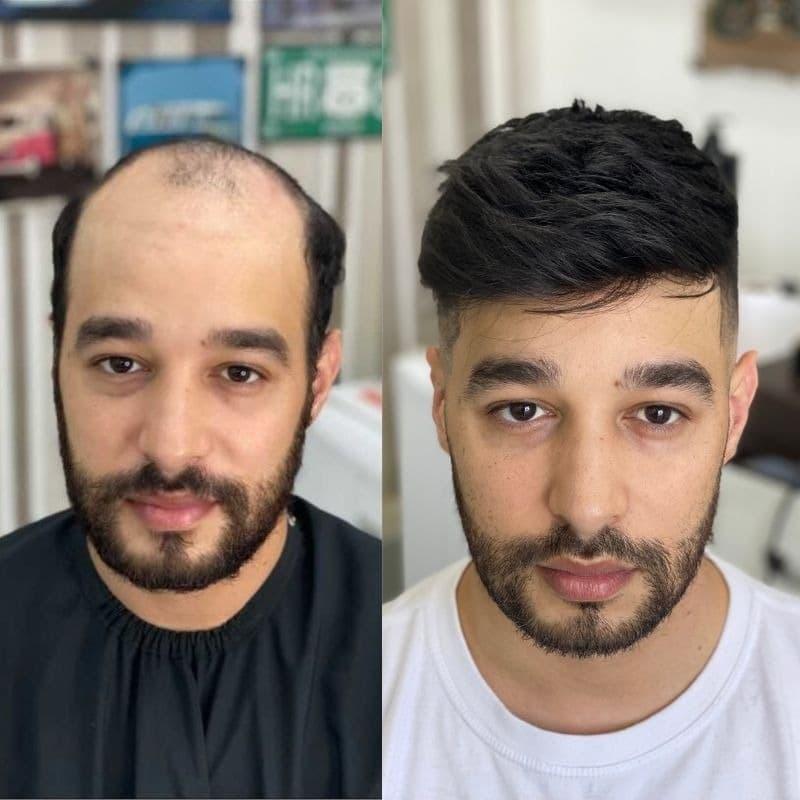
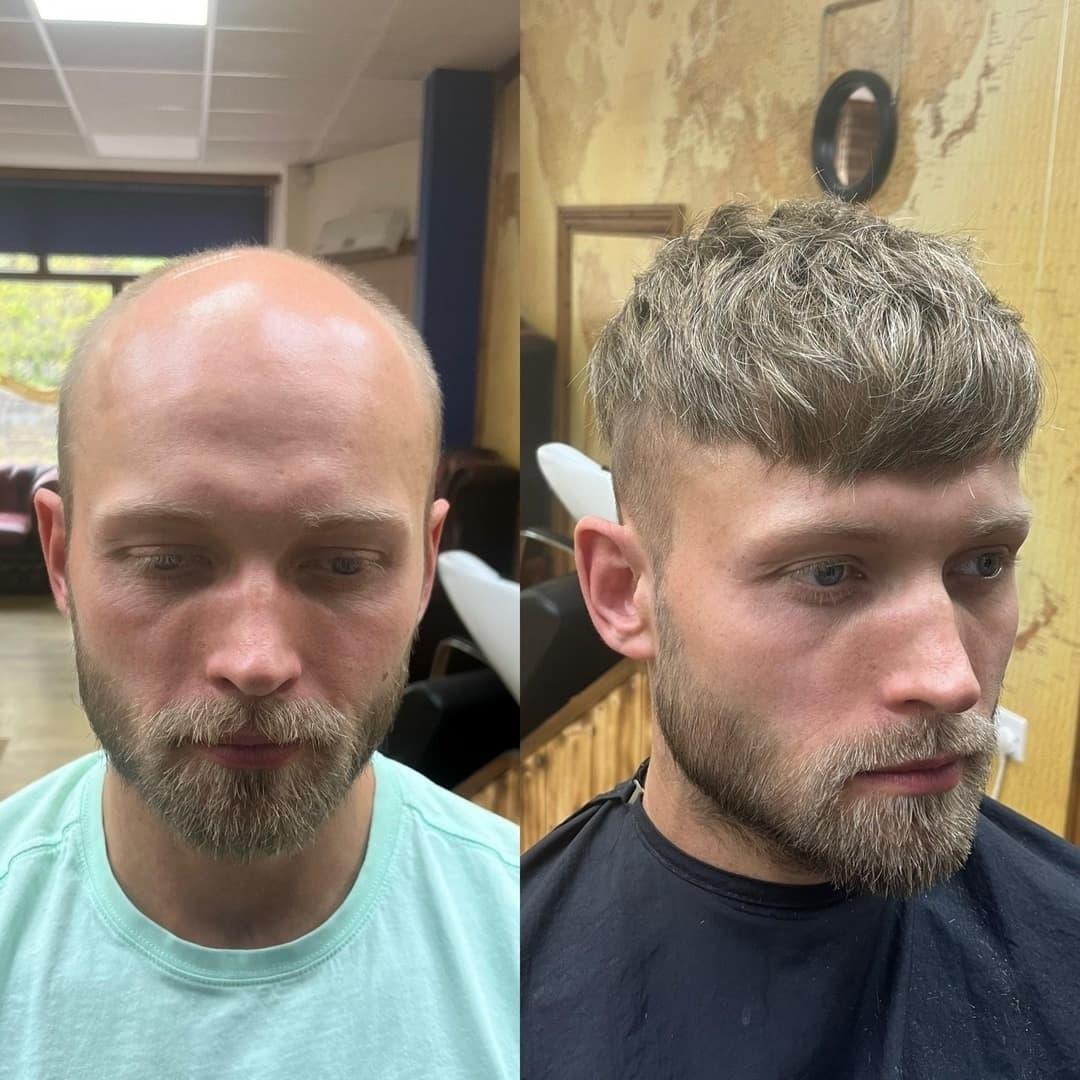
People's hair changes due to age, stress, medication, and lifestyle. Hair loss patterns—receding hairlines or thinning at the crown—can be mistaken for wig edges when observed in single low-quality frames. High-stress situations such as prolonged legal battles can accelerate hair changes that the public perceives as sudden or dramatic. Thus, the apparent differences in Menendez's looks across photos may be explained by natural variables rather than prosthetic hair.
Understanding common hairpiece types clarifies why some images spark speculation. Full lace wigs, lace front wigs, toupees, hair systems with adhesive, and simple clip-in toppers each have distinct visual signatures. Lace fronts, for instance, are designed to create a realistic hairline but may still betray themselves under close scrutiny. Toupees often sit on the crown and can appear as a distinct island of hair viewed from oblique angles. If a public figure wore any of these, photographic evidence could reveal seams or mismatches. For Menendez, however, no credible source or documented inventory has surfaced confirming use of a wig, and most available images lack the detail to definitively display the typical physical markers of a hairpiece.
Social sharing favors concise, provocative claims. The snippet did erik menendez have a wig functions like a viral headline—simple, provocative, and easy to repeat. Even when fact-checkers later provide calm, evidence-based context, the initial snippet retains traction. Search engines and social platforms amplify content with high engagement, so early-sensational posts about apparent wig sightings often get more visibility than later corrections. This dynamic encourages content producers to create click-driving visuals and captions, which perpetuates speculation.
Following these steps turns surface-level curiosity—often phrased as did erik menendez have a wig—into a disciplined visual inquiry that respects photographic limitations and avoids rumor-driven conclusions.
Certain well-circulated photos of Menendez show what some describe as a thicker hairline or different crown fullness. In forensic terms, these are low-confidence indicators. A thicker appearance might result from strategic combing, application of hair-thickening products, or simply a different camera exposure. In high-contrast black-and-white stills, scalp lines can vanish, creating an illusion of density. Conversely, harsh courtroom lighting can flatten features and exaggerate a receding hairline. Because the public image set lacks consistent, high-resolution frames taken with forensic intent, the safest interpretation of the archive is that it is inconclusive regarding prosthetic hair use.
Suggesting someone wore a wig to conceal identity, appear younger, or manipulate perception moves the conversation from visual evidence into motive speculation. Such assertions require corroborating documentation—purchases, sightings of a wig, witnesses, or statements—none of which have been credibly documented in Menendez's case. Responsible reporting distinguishes between plausible visual explanations and asserted motives that go beyond the available evidence.
To understand how the question did erik menendez have a wig gained traction, it helps to trace rumor anatomy. The process typically follows: an initial observation (a single striking image), rapid online sharing with suggestive captions, aggregation by gossip outlets, repetition across social platforms, and finally incorporation into "listicle" content that treats the claim as entertainment rather than verified fact. Each amplification step reduces the original context and increases the chance of misinterpretation.
Journalists and publishers should anchor visual claims in verifiable evidence. If running a feature about appearance changes, explicitly note image limitations and avoid definitive language unless experts confirm prosthetics. Use tags and headings to clarify sections that are investigative versus speculative. For SEO, craft metadata and on-page subheadings around the query—such as did erik menendez have a wig—but ensure content fulfills the search intent by delivering context, visual literacy, and source citations.
As an SEO-oriented note, repeating the key phrase did erik menendez have a wig within headings and in emphasized tags helps search engines match queries to this piece while providing authoritative, nuanced content to users. However, maintain natural language flow to avoid keyword stuffing.
After examining available public images, considering photographic artifacts, and reviewing the absence of credible documentation of prosthetics, the most defensible conclusion is that the evidence does not reliably prove that Erik Menendez wore a wig. Many visual anomalies that fuel the question did erik menendez have a wig can be explained by lighting, camera quality, natural hair variation, and image processing. That said, because images are limited in resolution and context, absolute disproof is equally unattainable without direct, verifiable proof. In short: intriguing but unproven.
If you are researching this topic further, prioritize: high-resolution files from photo agencies, statements from first-hand witnesses or wardrobe personnel if available, and expert commentary on hairpiece identification. Archive searches and contacting primary-source repositories are constructive next steps for anyone pursuing a definitive answer.
Q: Is there any official record or statement confirming a wig?
A: No credible official record or verified statement has surfaced that confirms the use of a wig in public appearances by Menendez; most claims are speculative.
Q: Could a wig be visible in some photos but not others?
A: In theory, yes—changes in angle, lighting, and hairstyle can hide or reveal a hairpiece—but absent clear high-resolution evidence, such variability is not proof.
Q: What’s the single best indicator to look for in images?
A: High-frequency signs such as lace lines at the hairline or visible attachment points near temples are strong indicators, but these require close, clear photos to detect reliably.
Ultimately, addressing recurring questions like did erik menendez have a wig is less about satisfying curiosity with a sensational claim and more about demonstrating how to evaluate visual claims with rigor, skepticism, and respect for evidentiary limits.
