This in-depth guide examines the evolution, craftsmanship and cultural consequences of wigs, while repeatedly addressing the SEO-focused query who created the wig to help readers and researchers discover authoritative answers. The narrative below is structured to illuminate historical origins, workshop practices, investigative methods for attribution, notable makers across continents and centuries, technical details of construction and materials, and the social meanings behind wearing a wig. Throughout the article the phrase who created the wig appears within headings, highlights and explanatory paragraphs to maintain a consistent keyword presence that supports discoverability without compromising readability.
Asking who created the wig is not merely about assigning credit; it is a doorway into social history, economics, aesthetics and identity. When historians, conservators, stylists or curious audiences ask who created the wig, they may be investigating provenance for a museum label, tracing stylistic lineages for theatrical restoration, or uncovering artisans' contributions to popular culture. Proper attribution influences valuation, preservation priorities, copyright-like authorship claims in modern design contexts, and our understanding of technological developments in fiber processing and lace application. The question who created the wig also helps to map networks of apprenticeship, trade guilds, and cross-cultural exchanges that shaped millinery and haircraft.
Across ancient civilizations, wigs served functional, symbolic and cosmetic roles. In Egypt, wigs were made by skilled hairworkers to protect scalp and denote rank; in Rome, hairpieces signaled social aspirations. By the 17th and 18th centuries in Europe the question who created the wig often pointed to established wigmakers who enjoyed royal patronage and who developed signature techniques—powdered finishes, elaborate curls and structural pads. Fast-forward to the 20th century and the rise of cinema and television: studio wig departments and independent wigmakers shaped iconic looks for performers. Contemporary questions of who created the wig can lead to credits for stylists in production notes or profiles of bespoke wig ateliers that combine centuries-old handwork with modern materials like heat-resistant synthetic fibers and fine Swiss lace.
Understanding materials and construction is essential when resolving who created the wig. Wigs can be categorized by base material (leather, hand-tied lace, machine-knotted cap), hair fiber (human, animal, synthetic), and finishing techniques (ventilation, heat-setting, dyeing, powdering). These attributes can be diagnostic: a particular method of knotting, a distinct backing stitch, or a custom-made combing pattern often betrays the hands that made the piece. Conservators analyzing historic wigs use textile microscopy, fiber analysis and archival research to answer who created the wig with evidentiary certainty.
Attribution combines physical analysis, documentary research and oral histories. Conservators conduct close material study; researchers consult invoices, guild rolls, studio logs and wardrobe lists; journalists pursue interviews with living makers or descendants. Forensic approaches—such as comparing stitch patterns, examining tool marks, or chemical analysis of adhesives—can corroborate documentary leads. When archives are incomplete, experts build probabilistic attributions, using stylistic clusters to answer who created the wig in the context of likely workshops rather than a single signed hand.
Provenance is a spectrum: absolute signatures at one end and educated attributions at the other. The rigorous question remains: given the evidence, who most plausibly created the wig?
Examining concrete cases shows how the question who created the wig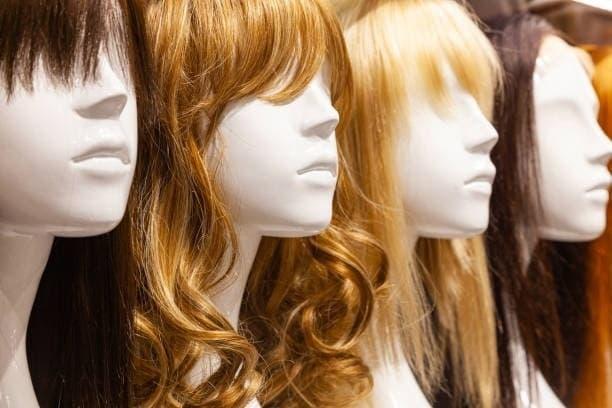 can be answered or remain contested.
A powdered, highly structured wig from a royal portrait underwent fiber testing and paper-trail research. Records from a 17th-century wigmaker’s ledger, combined with unique sewing patterns on the cap, led researchers to name a specific court workshop as the origin—an affirmative answer to who created the wig.
A stage wig used in a landmark theatrical run bore manufacturer stamps on internal components and corresponded to a studio inventory sheet, revealing the studio’s head wigmaker and thereby resolving who created the wig for performance historians.
For contemporary celebrity wigs, social media, stylist credits and bespoke invoices often make it straightforward to identify makers. When the public asks who created the wig after a high-profile appearance, stylists and brands frequently issue press releases that function as formal attribution.
Today’s wig ecosystem includes independent artisans, couture ateliers, television and film super-departments, and mass-market manufacturers. Each sector leaves different trails for attribution. For example, couture pieces may be accompanied by certificates and bespoke sketches; studio-made pieces may be logged in property departments; manufactured units are traceable via batch numbers. Answering who created the wig in the modern context often requires cross-referencing production credits, invoices and social media tags.
Wigs have been tools for class distinction, religious identity, performance transformation and personal reinvention. The question who created the wig helps reveal whose labor underpinned these social meanings—the anonymous maker in a workshop, the celebrity stylist shaping public image, or the artisan preserving a lost technique. Recognizing makers acknowledges labor histories and elevates craft visibility in cultural narratives.
Wigs have facilitated personal autonomy (enabling those with hair loss to present confidently), enabled theatrical illusion, and served as political signifiers. Tracing who created the wig illuminates who benefited, who labored and how design trends spread across regions and classes.
For museums and collectors, knowing who created the wig informs conservation strategy. Original adhesives, dyes and cap construction determine cleaning protocols and humidity control regimes. When conservators cannot definitively state who created the wig, they nonetheless document materials and methods to guide future treatment and to preserve evidence that might later resolve creatorship.
There are frequent pitfalls: assuming a famous wearer or stylist made the wig, mistaking supplier labels for author signatures, or over-relying on visual similarity. Researchers should treat such clues as parts of a puzzle rather than final proof of authorship. Proper attribution to answer who created the wig requires triangulating physical evidence with archival records and credible oral testimony.
If you want to know who created the wig in your possession or on screen, start with these steps: 1) inspect for maker’s marks, labels or stamps; 2) photograph construction details (ventilation, seams, inner hardware); 3) consult theater or studio archives for production numbers and call sheets; 4) contact museums or conservation departments for technical analysis; 5) seek out specialist historians or recognized wigmakers for stylistic comparison; and 6) keep records of provenance to support future attribution claims. These practical steps increase the chance of definitively answering who created the wig.
Credit matters for living artisans and for the historical record. When the identity of a wig’s creator is recovered, it restores professional recognition and can change the object's interpretation. Ethically, researchers should avoid speculative attributions and clearly communicate degrees of certainty when answering who created the wig. Proper citation of sources, transparent methodology and respectful engagement with descendants or living makers are essential.
Technological advances—3D scanning and printing of cap replicas, laser-cut lace, new synthetic fibers and digitally-controlled knotting machines—are reshaping what it means to ask who created the wig. While some innovations automate aspects of production, many couture artisans integrate new tools with handcraft traditions. Documentation of these hybrid methods will make future attributions more precise by preserving digital design files and machine parameters alongside traditional workshop notes.
When using search engines, archives or contacting experts, phrase queries to get authoritative results: include time frame, wearer/owner, context (theater, court, film), materials, and any visible marks. For example: "who created the wig worn by [performer] in [production]" or "who created the wig, early 18th century, leather base" will yield targeted leads. Always include who created the wig in both metadata and headings when publishing your findings to aid discoverability.
Answering who created the wig is an interdisciplinary task that blends material science, archival sleuthing and craft knowledge. Clear documentation, critical source evaluation and respect for maker communities lead to robust attributions. Whether the goal is scholarly publication, provenance research or simply satisfying curiosity, the strategies outlined here increase accuracy and visibility of findings.
Consult specialized texts on costume history, conservation manuals for hair and textile objects, theater archives, trade guild registers and oral histories of contemporary wigmakers. Professional associations, university conservation programs and museum departments often publish case studies that model best practices for answering questions of authorship such as who created the wig.
Tracing authorship of a wig is rewarding work: it restores the maker’s presence in the story of an object, enriches understanding of cultural practices and clarifies conservation choices. By applying technical analysis, documentary research and ethical practice, it is often possible to move from speculative claims to confident attribution. When you next wonder who created the wig, use the approaches described here to pursue a precise and well-supported answer.